Motorsport Evolution
Competition is a basic characteristic of man. For this reason, with the advent of the internal combustion engine, man began to organize races on board cars/motorbikes.
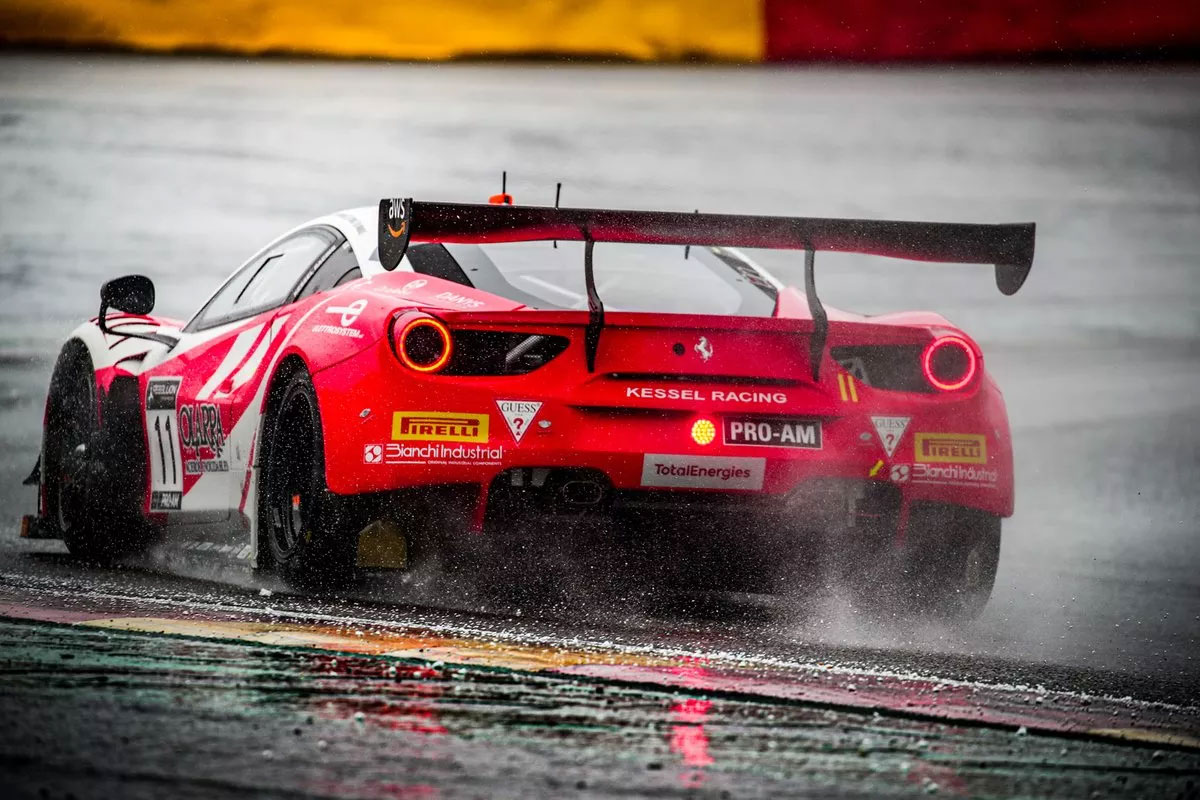
Motorsport was born in the 19th century as a natural consequence of the evolution of the automotive industry and the passion of car manufacturers. Over time, from a simple passion and outlet of enthusiasts, the supporters of motorsport have seen racing as a potential business: what better business card than building racing cars/motorbikes capable of beating the competition? At the beginning, the races were used only to emphasize the reliability and speed of the cars/motorbikes, without paying attention to their marketing mix. Racing began to attract the sports press, and manufacturers connected to the automotive world (tyres, fuels, lubricants, etc.) began to advertise, linking their brand to the performance of the runners. Having achieved a notable level of interest from the various mass media, even brands not connected to the world of competitions began to be interested in sponsorship, to convey messages through car/motorbike racing: sponsorships began to take advantage of the media coverage to which motorsport is exposed , so as to start the A.I.D.A. process. (awareness, interest, desire, action).The evolution of racing led to the creation of Formula 1 in 1950, the maximum expression of car racing while in 1949 the FIM Federation Internationale de Motocyclisme had given the start of the first World championship of Motorcycles.
“Win on Sunday, sell on Monday”[1]
“We were in racing strictly for business: competition success was the cheapest way of selling cars” cit. W.O. Bentley
These factors continued to increase, creating a real motorsport industry: the organized events attracted many enthusiasts and onlookers, with benefits for organizers, sponsors and tourist facilities in the area: even local administrations began to exploit the benefits deriving from motorsport.The true consecration of racing as a showcase for companies in other sectors came at the end of the 1960s, when the tobacco industry became inextricably linked with car racing. The relationship between these two worlds, apparently distant, began in the 1968 South African GP with the agreement between Colin Chapman (Lotus boss) and the Rhodesian Cigarette Company, which opted to sponsor the English team since cigarette advertising was banned on television. From the following race, the agreement was signed with Gold Leaf, another tobacco industry. This sponsorship broke the tradition of racing with cars colored in the national colours, forcing Lotus to adopt a red-white-gold livery desired by the sponsor.The advent of the tobacco industry opened the eyes of other companies to dive into racing car sponsorships.
If Colin Chapman of Lotus was the first to bring outside sponsorship to GP racing, Bernie Ecclestone was the person who saw the commercial possibilities within F1”
The destiny of F.1, and of the motor racing that is inspired by it, has a central figure in Bernie Ecclestone: in the mid-70s he was the owner of the Brabham team and with Max Mosley, founding lawyer of March F.1, together with the FIA they signed the “Concord Agreement” which was nothing more than a document that left the FIA with control from a sporting point of view of F.1, but left the fate of the commercial part to the FOCA (Formula One Constructor’s Association). This allowed Ecclestone to acquire, step by step, the F.1 television rights until he founded FOCA TV in 1985, a company that broadcast F.1 races in around ninety countries, via the EBU (European Broadcasting Union ). Subsequently, with the help of Christian Vogt, the person who had handled the television broadcasting of FIFA, UEFA and the IAAF, they bypassed the EBU by dealing directly with the private networks that were starting to arise in that period. By doing so, Ecclestone increased income from television rights for the teams and significantly increased the visibility of motorsport, visibility which was also increased by broadcasting not only the race, but also qualifying and warm-ups.
“At the end of the day, F1 is built around the TV audience, and it could be argued that it matters little to the casual viewer where a race is held.” cit. Cooper
The implications of television on the world of F.1 are there for all to see, but not everyone is able to grasp them: for example in the 70s/80s, Renault ran with the yellow livery with black sponsors, not because it was particularly beautiful, but because its designer, Peter Stevens, realized that those were the colors that best made the logos stand out on the black and white screens of the time. Often sponsors who want to start investing in F.1 do not start looking for teams based on results, but rather from the color combination: clear examples are the cases of the two banks RBS and ING Direct, which chose Williams and Renault respectively because their coloring went well with their brand logos.To better understand the strategies of the large companies that launched themselves into motorsport, a minute and a half of advertising on television costs approximately one and a half million dollars. An important brand with an investment in F.1 is subjected to media exposure for an entire season, at a price that is absolutely lower when compared in terms of exposure to that of a single advertising investment: always using the same approximate method, having exposure like that afforded by an F1 season can cost up to $32,400 million.With the growing importance of television, the entire approach to classic F.1 has changed: we have moved from long, fast circuits to shorter circuits, with slower and safer corners. The reason is due to the greater ease for the cameras to follow a car traveling at a moderate speed rather than one speeding above 300 km/h. Furthermore, night GPs set in Singapore were introduced, with the dual objective of targeting the Asian market, both as sponsors and spectators, and above all making the Asian trip easily followable also in Europe: taking advantage of the time zone, the GP in Singapore it starts at exactly the same time it usually starts in Europe, 2pm on Sunday.Ultimately, TV was able to exploit the fact of “bringing the risk and adrenaline of racing into people’s homes” creating a media phenomenon that turned out to be a real money machine.Motor racing is founded on the reward of success: in addition to the clear sporting-competitive connotation of success, the economic counterpart should not be underestimated. The media, obviously, are more interested in those fighting for victory than in those elbowing their way to the rear. This is why investing in a winning team means investing in a team that ensures greater media exposure than the rest of the field, which has a notable return in terms of awareness. It seems clear how a virtuous circle is created: results bring visibility which brings sponsorships to invest in technical innovations which bring other results.
Sponsorship has two main effects: increasing brand visibility and transferring the image of the sponsored event or team into the brand positioning process. The first aspect has been discussed and treated for a long time, while the second aspect is the one most neglected in practice and in the literature. The brand image is defined as the associations that are kept in memory by individuals with reference to the brand itself: the image and consideration that the consumer has of the testimonial is automatically transmitted to the sponsoring brand. This is a double-edged sword, as studies on the memory of human beings have reported that it operates selectively: only some information that is considered “strong” by our brain is memorized. For this reason, the choice of testimonial is crucial: a testimonial that is far from the brand’s image can confuse the consumer, weakening its image with a consequent negative return in terms of positioning. On the contrary, obviously, a testimonial that goes well with the image of the sponsor will strengthen this union in the minds of consumers. This can be an excellent method to transfer the values that are transmitted by the sponsored sport to the sponsoring brand, with the related advantage in terms of positioning. Various studies have attested that the sponsorship relationship can be of different types:
- The logo of the title sponsor being displayed on a team’s car, bike, kit, or other official apparel
- The logo being displayed in the team’s printed material, for example on TV backdrops, in magazines and newsletters, on posters and headed paper, and so on
- Title sponsor featuring extensively on sports team’s website and through its social media channels
- Title sponsor’s products frequently showcased to the team’s fans
- The reach of the team used to leverage competitions and offers that showcase the sponsor’s products or services
- The title sponsor having access to players, drivers, riders and athletes for events such as trade shows
- The chance to organize hospitality events and B2B opportunities at the event in which the sports team is present or competing
- The power of title sponsorship lies in the diverse ways it can be harnessed. The visibility of the title sponsor’s logo on a team’s car, bike, kit, or other official apparel is a given. However, the brand’s visibility extends to the team’s printed material such as TV backdrops, magazines, newsletters, posters, and even the team’s official letterheads.
- Furthermore, the title sponsor gains substantial digital prominence through the team’s website and social media channels. The sponsor’s products are frequently showcased to the team’s fans, providing an opportunity for direct product engagement. The team’s reach is also used to leverage competitions and offers that feature the sponsor’s products or services.
- In addition to these branding benefits, the title sponsor gains exclusive access to players, drivers, riders, and athletes for events like trade shows. This opens avenues for hosting hospitality events and creating B2B opportunities at events where the sports team is present or competing.
- However, managing title sponsorship requires time and expertise, considering the vast possibilities at disposal. This is where experienced sports marketing agencies like WCM come into play, offering solutions in a straightforward and expert manner.
“Sponsorship persuades indirectly. Sponsorship does not try to change perceptions of the brand in frontal assault. Rather, sponsorship improves the perception of a brand by flanking our beliefs about the brand and linking the brand to an event or organization that the target audience already values highly”. Crimmins & Horn, 1996
Advertising and sponsorship try to achieve the same objective, albeit in a substantially different way: in this regard, Robert Fletcher of Rothmans said: “simple advertising pushes people to buy. Sponsorship creates awareness of the brand, but it is fundamentally different, as it persuades them indirectly.”Ultimately, what gives sponsorship an advantage is the “aura of indifference” with which it is endowed: when there is an advertisement, the intent is clear even to the eyes of the less expert, the sponsorship is better able to hide the persuasive intent.
To offer a better result for sponsorship, it is usual to divide it into three categories, each with its own specifications: primary sponsors, associate sponsors and technical sponsors.The distinction between primary and associated is made in relation to the budget and the type of support: it follows that the greater the economic contribution of the sponsor, the greater the space available to it in terms of advertising and the possibility of exploiting hospitality. The technical sponsor is less cared for from the “classic” point of view of a sponsorship (advertising, hospitality and all the other tools), as it is strengthened by the fact of being a supplier to the team itself: studies have shown that a product used by a team, it will certainly be of strong appeal to its supporters, as the team’s trust in the brand used is directly conveyed to its supporters.
In the high-octane world of motorsports, from Formula 1 to MotoGP, sponsorship naming rights serve as a pivotal component in the marketing mix for brands seeking maximum visibility and exposure.
Such rights are essentially contracts that allow a sponsor to append their name or logo to a sporting event, a team, or even a stadium for a designated period, translating into significant brand recognition.
From an economics standpoint, the value derived from sponsorship naming rights is immense.
On one hand, a sponsor injects substantial funds into the team or event, facilitating everything from technological advancements, improvements in racing gear, to overall team operations. This sponsorship dollar influx plays a crucial role in enabling the team or event to maintain its competitive edge and continue offering exhilarating performances to its fans.
On the other hand, this association provides the sponsor with extensive visibility to a global audience. As every race unfolds, millions of eyeballs are glued to their screens, following the action-packed contests. This leads to a surge in brand awareness and recall for sponsors, as their logos become indelibly associated with exciting races and famous drivers. The more thrilling the race, the more positive the association for the sponsor, and the greater the potential return on their investment.
With Formula 1 and MotoGP races taking place worldwide, sponsorship naming rights offer international exposure to a diverse and enthusiastic audience. High-visibility events such as these attract significant media attention, resulting in extensive coverage across different platforms and regions. Each time the sponsor logos get another moment in the limelight, perpetuating the cycle of brand visibility and recognition.
This continuous cycle of exposure also contributes to a longer-term benefit: brand loyalty. Fans of motorsports often develop an affinity for the brands that support their favorite teams or events, which can ultimately drive sales and increase market share for the sponsors.
The complex interplay of sponsorship dollars, sponsor logos, and millions of eyeballs watching races across the globe underscores the vital role of title sponsorship in today’s motorsports landscape.
Whether it’s Formula 1 or MotoGP, securing sponsorship naming rights is a strategic move that allows brands to fuel their growth engine while adding value to the fast-paced world of professional racing.
The team offers a service: it provides the driver with a racing car or motorbike and the management of it for an entire season. Based on the services offered, the team asks the host for a fee capable of covering expenses and remunerating all members who work in the team. So, on what basis is one team chosen rather than another? Obviously, the staff and their technical skills come first when it comes to a motorsport competition, but they are not the only parameter to take into account: the sponsors pay to make their brand appear and to link it to the figure of the driver/rider, and it will have more relevance if the racer’s results are excellent, obviously, but the management of relations with the public inside and outside the racetrack completes the profile of a racing team. The reason is easy to understand: the better the team manages to convey the image of its sponsors, the more sponsors it will attract, which will give it an advantage in terms of budget to invest in technicians and drivers, fueling the virtuous circle. In addition to this, which is the core business of a team, there are various ancillary activities, such as private tests, driving schools, etc., which complete the activities of a team.
A team is made up of a series of elements that must coexist and work in the same direction in order to achieve satisfactory results. Specifically, the elements are:
• Car/Motorbike: it is the basic element of the competition, and as such it cannot be overlooked in any detail. It is a real “running billboard”, so it is essential that it is both fast and aesthetically pleasing. It is essential to have bright colors that attract the public’s attention and the sponsors’ logos stand out. The car/motorbike needs to be developed and tested, based on the data collected by specific instruments such as telemetry, and above all on the impression of whoever has to drive/ride the car/motorbike: the driver/rider.
• Drivers/riders: they are those who manage to turn a good car into a winning car/motorbike. Depending on the competition, you choose between a pilot with “the suitcase” (i.e. paying pilots), or professional or very expert pilots, capable of bringing excellent results and who act as a guarantee for the sponsors.
• Mechanics: the choice of mechanics varies based on experience and preparation, and above all based on the type of competition and car/motorbike brought onto the field. It is fundamental to create a group united by a strong passion for motorsport which must also act as a glue at the level of personal relationships.
• Engineers: they are those who lead the development and preparation of the car/motorbike. Generally, a managerial role is entrusted to the most trained engineer, who has the task of supervising the entire development of the car/motorbikr, leaving individual engineers with a single area to follow: transmission, engine, suspensions, etc.
• Logistics: it is one of the least exploited levers, but capable of generating a great competitive advantage. Of fundamental importance is the possibility of making transfers at the lowest possible cost, seeking the best solution in terms of logistics. We work both through commercial agreements with specialized companies and by seeking efficiency in terms of packaging of the materials to be shipped.• Suppliers: This is the main outsourcing and insourcing choice that a team has to make. Generally, fundamental components that require a great effort in terms of technology and research and development are outsourced, generally they are: tyres, fuels, lubricants etc. Sometimes the management of the development of a part, or the entire car, is entrusted to specialized external companies: as this is one of the core activities of a team, outsourcing is not recommended for the simple fact that it does not allow you to increase skills and experience.
Marketing Public Relation (MPR) they are an all-encompassing advertising program, aimed at the masses or a specific target, with the intention of increasing the company’s sales or, as in our case, the use of its products. Particularly important is the possibility of taking advantage of hospitality within the paddock during the competition: this gives the team the opportunity to invite current and potential sponsors with the aim of strengthening the relationship, offering them the opportunity to spend time on the racetrack. Hospitality is not only linked to the concept of exclusivity, but also and above all to the entertainment of the spectator, in order to foster the relationship between potential consumer and sponsor, offering him the opportunity to spend time in direct contact with the sponsoring company. Well-organised hospitality, with a large turnout of the public in the paddock, is certainly the best business card for attracting new sponsors.
Social networks have such potential that it makes them the most important part of the WEB revolution: they put the team in direct contact with its followers, creating an almost “emotional” bond between the fan and the team which brings advantages to the team’s sponsors,
The novelty compared to the communication prior to the advent of the various Twitter, Facebook, Instagram etc. is that the individual reality, be it a rider, a team or a federation, can communicate his thoughts directly to the followers without having to resort to mass media and means of classic communications. This direct route of communication guarantees a strong impact on the attention of fans and stakeholders, and the possibility of changing the way they present themselves to the public. A strong bond with the supporters guarantees the team the possibility of successfully “selling” advertising spaces to sponsors, guaranteeing an excellent return thanks to the positive relationship created. One of the most interesting and best exploitable aspects of social networks is the possibility of creating viral contents: these can be of various kinds (texts, photos and videos) and have the peculiarity of being seen and re-shared by various users, significantly expanding the amount of views and consequently have a highly strategic impact on marketing operations based on the growth of awareness. The possibility of sending contents and logos around the internet at a negligible cost, totaling many thousands of views, if not even more, has appealed to all the companies most attentive to the latest marketing trends who have exploited them fully, investing time and resources in social networks. The viral revolution of social networks, used as a tool for media engagement, began in 2012 with the tweet of Brad Keselowski, a NASCAR driver who published on Twitter the photo of the Daytona track in flames due to an accident during the Daytona 500. In a few hours his followers tripled, the contact on the Daytona circuit gained more than a million followers and the accounts of some of the most famous drivers of the series also benefited, reaching over 100,000 contacts each. NASCAR’s intelligent move was not to penalize the driver for showing theoretically confidential images, but was to exploit the wave of shares created by the driver to enhance the visibility of the series on social media by creating a partnership with Twitter, a strategy that was copied by almost all sports federations and beyond.
At the basis of every entrepreneurial project there is the golden rule according to which every good project must necessarily create value which, vulgarly speaking, means that it must have an economic return that justifies the effort.Who are interested in a motorsport event? We can distinguish various figures, but everyone must work in a single direction so that the project is a winning project and does not collapse.Among all the figures, that of the organizer stands out. In fact, it is the fulcrum of the creation of value through motor racing since it is the one who puts the event itself into action. It is one of the most difficult tasks within motorsport, as one cannot afford the luxury of leaving out one aspect rather than another: everything must be functional to the success of the series and everything must be followed in every detail.
This is intended to show just some of the infinite possibilities of creating value through motor racing: depending on the interlocutors, ad hoc contracts and strategies are studied to achieve the results that all parties had set themselves. The only way to achieve the objectives set by both parties, sponsor and sponsored party, is to work together and study the strategy based on the economic possibilities of the sponsor to be able to derive the greatest possible advantage.